Resealable bags are easy to overlook because the closure looks simple. Open the bag, take out what you need, press the zipper closed, and put it back on the shelf. For the user, that convenience is the main benefit. For a brand or packaging buyer, however, the decision involves more than choosing a zipper.
The bag still has to protect the product, run smoothly during filling, survive storage and transport, present the brand clearly, and fit the way customers use the product after opening. A pouch for roasted coffee may need a strong moisture and oxygen barrier. A bag for electronic components may need puncture resistance and static-control options. A spout pouch for a drink needs a different structure again.
This guide explains the main types of resealable bags, where they are commonly used, and what buyers should confirm before production.
What Makes a Bag Resealable?
A resealable bag can be opened and closed more than once without destroying the package. The most familiar design uses an interlocking zipper track, but resealable packaging can also include sliders, hook-and-loop closures, press seals, caps, or spouts.
The closure is only one part of the package. Its performance also depends on:
The film or laminated material
The thickness of the bag
The seal around the zipper or spout
The barrier required for the product
The way the bag is filled and handled
Storage temperature and transport conditions
A zipper can help protect freshness after opening, but it does not automatically make every bag fully airtight or suitable for long-term storage. For sensitive products, the complete material structure and heat seals matter just as much as the closure.
Why Brands Choose Resealable Packaging
The main reason is straightforward: customers rarely use every product at once. A resealable package lets them close the bag between uses, which helps keep the contents organized and reduces the need for a separate container.
For businesses, the format offers several practical benefits:
Products can be opened for inspection and closed again
Customers can use the original packaging throughout the product's life
Flexible bags take less storage space than many rigid containers
Printed pouches provide room for branding, instructions, ingredients, and product information
Different barrier layers and closures can be selected for different products
The right format depends on how the product is displayed, filled, stored, transported, and consumed. That is why “resealable bag” covers several different pouch styles rather than one standard design.
Main Types of Resealable Bags
1) Stand Up Pouches
Stand up pouches use a bottom gusset that opens when the bag is filled, allowing it to stand on a shelf. They are widely used for snacks, coffee, tea, dried fruit, pet treats, powders, supplements, and household products.
A zipper can be added below the top heat seal, so the package remains closed during transport and can be resealed after the customer opens it. Options may include tear notches, clear windows, hang holes, degassing valves, and matte or glossy finishes.
Stand up pouches are a practical choice when shelf presentation and repeated use are both important.
2) 3 Side Seal Pouches
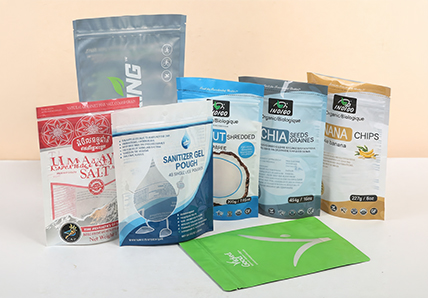
A 3 side seal pouch is sealed on three edges, leaving one side open for filling. After filling, the remaining side is heat sealed. This format lies flat and uses material efficiently, making it suitable for smaller portions, samples, powders, spices, dried foods, medical products, and electronic accessories.
A zipper can be included when the product will be opened several times. Without a bottom gusset, the pouch does not stand in the same way as a stand up pouch, but it is easy to stack, pack, and transport.
3) Aluminum Foil Bags
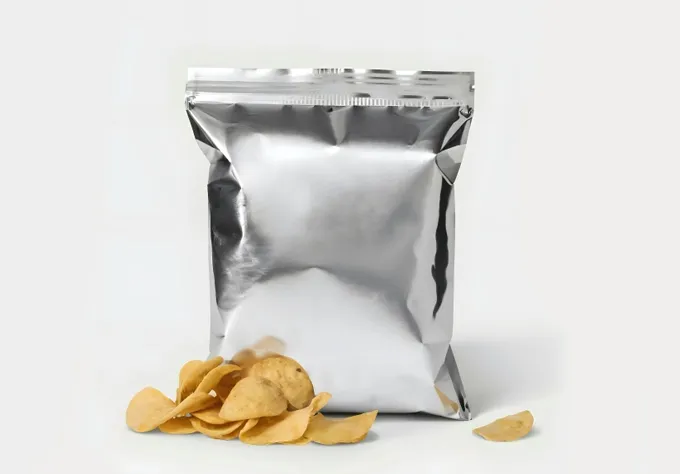
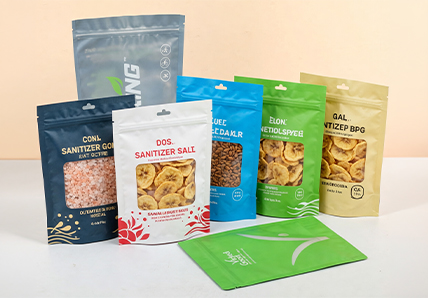
Aluminum foil bags are chosen when the product needs stronger protection from light, oxygen, moisture, or odor transfer. The foil layer is normally part of a laminated structure rather than being used alone.
These bags are commonly used for coffee, tea, powders, supplements, pharmaceuticals, chemicals, electronic components, and other sensitive products. A resealable zipper can be added for products that are used in portions, while the top heat seal provides tamper evidence before the first opening.
Because different products require different barrier levels, buyers should confirm the complete laminate, not simply ask for an “aluminum bag.”
4) 8 Side Seal Pouches
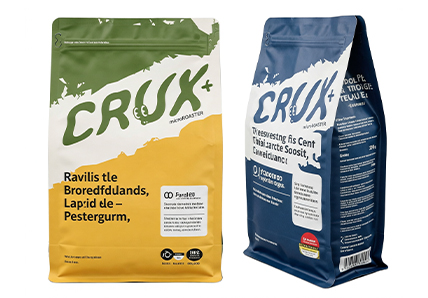
An 8 side seal pouch, often called a flat bottom pouch or box pouch, has a stable base and multiple sealed edges that create a structured shape. It combines the shelf presence of a box with the lower weight and storage efficiency of flexible packaging.
This format is often selected for premium coffee, tea, snacks, pet food, grains, protein powders, and other products where appearance and capacity both matter. The broad front, back, and side panels provide useful space for branding and product information.
A zipper, degassing valve, tear notch, or tin tie can be added depending on the product and filling process.
5) Spout Pouches
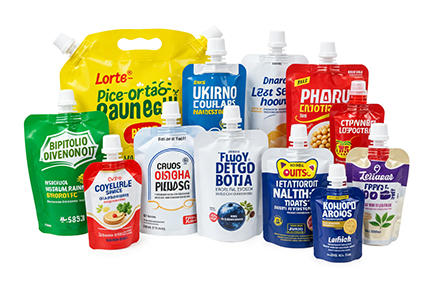
Spout pouches are designed for liquids, semi-liquids, and products that need controlled pouring. The cap allows the package to be opened and closed repeatedly, while the flexible pouch uses less space than many rigid bottles when empty.
Common applications include juice, sauces, baby food, drink concentrates, cleaning products, oils, gels, and personal-care refills. Spout position, cap size, seal strength, product viscosity, and filling temperature all need to be considered during design.
For hot-fill or retort applications, the material structure must be selected specifically for the processing conditions.
6) Other Useful Resealable Formats
Depending on the product, buyers may also consider:
Side-gusset bags for coffee, pet food, and bulk dry products
Kraft paper pouches for a natural retail appearance
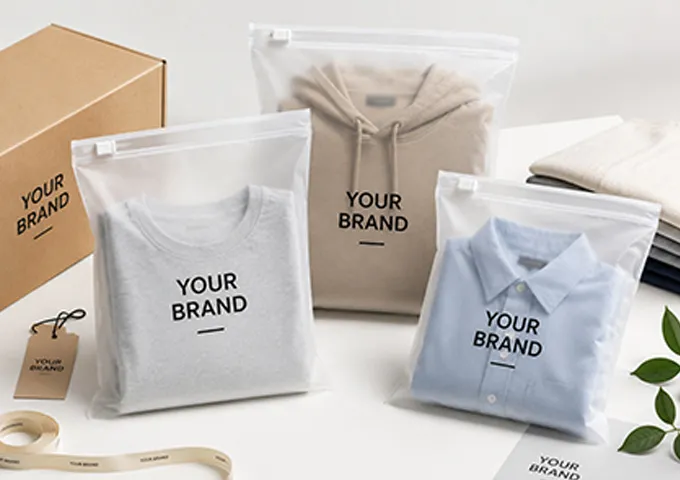
Clear OPP or PE zipper bags for apparel, stationery, and product organization
Mylar-style barrier bags for food, supplements, and sensitive goods
Child-resistant zipper bags for products that require controlled access
Shaped or die-cut pouches for promotional and specialty packaging
The best option is usually the simplest format that meets the product's protection, display, filling, and user requirements.
Applications in Food and Beverage Packaging
Food and beverage products are among the most common uses for resealable bags. The closure makes it easier to use the product in portions while keeping the remaining contents in the original package.
Typical applications include:
Coffee beans and ground coffee
Tea and herbal products
Nuts, dried fruit, and trail mixes
Candy, biscuits, and snack foods
Spices, seasonings, and baking ingredients
Grains, cereal, flour, and powders
Protein powder and dietary supplements
Pet food and pet treats
Sauces, purees, juice, and drink concentrates in spout pouches
For dry foods, buyers often focus on moisture, oxygen, aroma, and light protection. Coffee may require a degassing valve. Powdered products need clean seals and suitable barrier performance. Snacks may need puncture resistance where sharp edges can damage the film.
For liquid products, the questions are different. The pouch must match the filling method, temperature, viscosity, spout size, cap design, and transport conditions. Drop testing and leak testing are usually more important than they are for dry goods.
Food-contact documentation should be confirmed for the target market before production. Shelf-life claims should be based on the actual product, material structure, filling process, and storage conditions rather than on the zipper alone.
Applications in Electronics and Industrial Packaging
Resealable bags are also useful for electronic components, cables, connectors, spare parts, tools, and small industrial items. They keep related parts together and allow technicians, warehouse staff, or customers to open the package without destroying it.
Common uses include:
Cables, adapters, and chargers
Screws, fasteners, and repair kits
Connectors, sensors, and small components
Replacement parts and maintenance items
Instruction sets and accessory packs
Moisture-sensitive components in suitable barrier packaging
For ordinary accessories, a clear or printed zipper bag may be enough. Sensitive electronic parts may require stronger moisture barriers, aluminum foil laminates, desiccants, or antistatic/ESD materials. These properties are not created by a standard zipper, so they must be specified separately.
Bag strength also matters. Components with sharp corners may need a thicker film or a puncture-resistant layer. For export shipments, carton packing and internal protection should be considered together with the pouch.
Choosing the Material Structure
Resealable bags can be made from single-layer films or laminated structures. The right choice depends on what the product needs to be protected from.
Material or Structure | Common Purpose | Typical Considerations |
PE / LDPE | Flexible zipper bags and inner seal layers | Soft feel, heat sealability, thickness, clarity |
OPP / BOPP | Clear presentation and printable outer layers | Clarity, stiffness, surface treatment |
PET | Strength and print stability | Durability, temperature resistance, laminate design |
Metallized film | Light and moderate barrier protection | Appearance, barrier level, recyclability considerations |
Aluminum foil laminate | High light, oxygen, and moisture barrier | Flex-crack risk, seal layer, full laminate specification |
Kraft paper laminate | Natural appearance | Barrier layer, grease resistance, disposal claims |
Nylon laminate | Puncture resistance and strength | Product weight, sharp edges, processing conditions |
Terms such as “food-grade,” “recyclable,” or “compostable” should be supported by the correct material specification and documentation. The finished pouch structure, inks, adhesives, zipper, and intended use all need to be considered.
Closures and Functional Features
A resealable pouch can include more than a standard press-to-close zipper. Useful options include:
Standard zipper for everyday repeated opening
Slider zipper for easier operation
Child-resistant zipper for controlled-access packaging
Hook-and-loop closure for powders or products that may collect in a zipper track
Spout and cap for liquids and semi-liquids
Degassing valve for freshly roasted coffee
Tear notch for easier first opening
Top heat seal for tamper evidence
Clear window for product visibility
Hang hole for retail display
Adding every available feature rarely improves a package. Each feature should solve a real handling, protection, display, or user problem.
Are Resealable Bags Airtight?
Some resealable bags provide a good practical seal for everyday storage, but “airtight” should not be treated as a universal claim. Seal performance varies with the zipper design, film thickness, bag construction, product particles, and how carefully the user closes the package.
For short-term storage of snacks or household items, a standard zipper may be sufficient. For coffee, pharmaceuticals, moisture-sensitive electronics, or long shelf-life products, the complete barrier structure and heat seals should be evaluated. In some cases, vacuum packaging, valves, desiccants, or secondary packaging may be needed.
The safest approach is to describe the required performance to the supplier rather than relying on a general label.
Final Thoughts
Resealable bags are useful because they stay part of the product after the first opening. A good pouch protects the contents during transport, works with the filling process, gives customers convenient access, and remains easy to close between uses.
Choosing the right bag starts with the product rather than the zipper. Once the protection, filling, display, and user requirements are clear, it becomes much easier to select the right format—whether that is a stand up pouch for snacks, an aluminum foil bag for sensitive goods, an 8 side seal pouch for premium coffee, a spout pouch for liquids, or a simple zipper bag for components and accessories.
If you are planning a custom resealable packaging project, send ZoyuePack your product details, filling weight, preferred bag style, artwork, quantity, and delivery market. We can help review the options and prepare a practical specification for sampling and quotation.
Oven Zhong
I’ve spent over 20 years deeply rooted in the packaging industry, learning the craft from the ground up within my family’s business. Today, as the founder of ZoyuePack, I’m known by colleagues and competitors alike as the "Packaging Brother"—a title I wear with pride because I believe in collaboration over mere competition. You’ll often find me on the factory floor filming videos to demystify the science of LDPE versus compostable materials. For me, ZoyuePack isn't just a faceless corporation; it’s a platform where I can educate, share candid industry insights, and help you tell your brand’s story through sustainable, innovative packaging.
 English