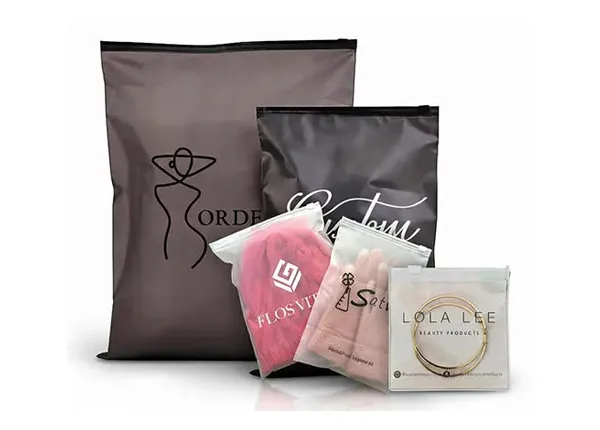
A shipping bag has a short journey but a surprisingly long list of responsibilities. It must move quickly through the packing station, survive sorting equipment and unpredictable weather, protect the customer’s privacy, and arrive looking presentable. If it also carries your colors or logo, it becomes part of the brand experience before the product is even revealed.
That is why choosing a poly mailer should not be treated as a last-minute purchasing decision. The right bag can simplify fulfillment and create a cleaner delivery experience. The wrong one can lead to split seams, awkward parcels, damaged products, and packaging that feels disconnected from the brand.
This guide explains how to select, pack, seal, and customize poly mailers with both logistics and customer experience in mind.
First, Decide Whether a Poly Mailer Fits the Product
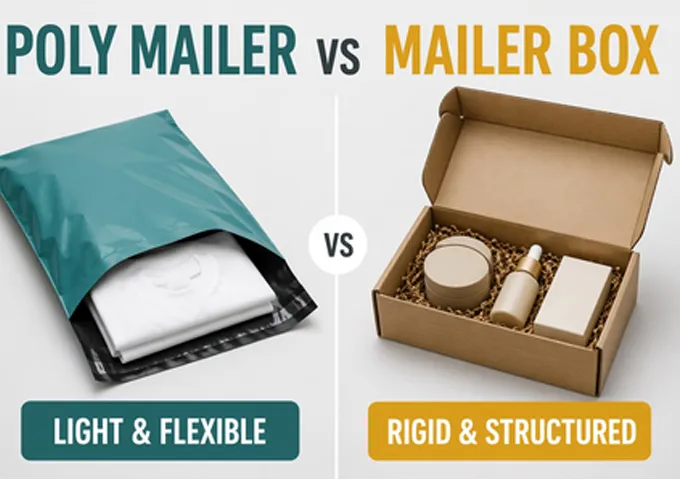
Poly mailers are lightweight shipping envelopes commonly used for apparel, textiles, accessories, documents, and other products that do not require the rigid structure of a box. Their flexible construction makes them easy to store and quick to handle at a busy packing station.
They are particularly practical for:
T-shirts, hoodies, dresses, and other folded clothing
Bedding, towels, and soft home textiles
Fabric accessories and selected fashion items
Documents and printed materials that have suitable internal support
Pre-boxed products that only need an outer weather-resistant layer
However, flexibility has limits. A standard mailer is not the best primary protection for glass, ceramics, electronics, or products that can be crushed. Items with sharp corners, exposed zippers, or metal hardware may also puncture the film unless they are wrapped or covered first.
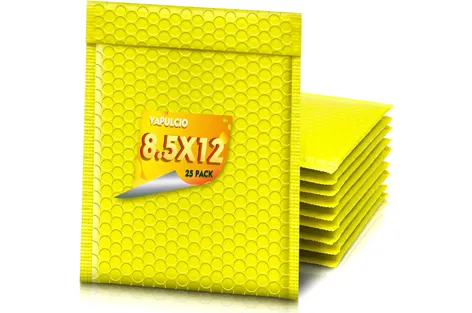
For a paperback book or a small accessory, a bubble mailer may provide a better balance of cushioning and low weight. For bend-sensitive printed materials, adding a rigid board can help. The practical rule is simple: the mailer should complement the product’s protection needs, not replace protection the product genuinely requires.
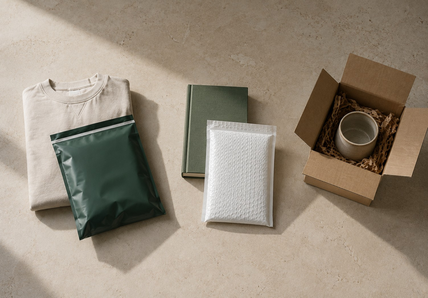
Choose a Size That Holds the Product—Not Empty Air
One of the most common packing mistakes is selecting a bag based only on the product’s flat dimensions. Depth matters too. A folded sweatshirt may fit on paper but become too bulky once inserted, putting unnecessary tension on the side seams and closure.
An oversized mailer creates a different problem. The contents can slide around, the parcel becomes untidy, and the excess film may catch or fold during handling. It also uses more material than necessary.
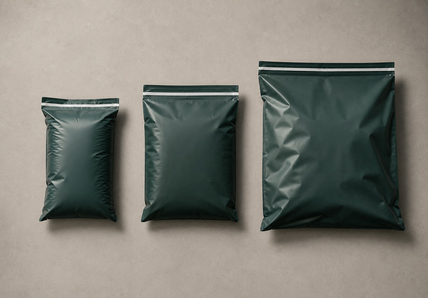
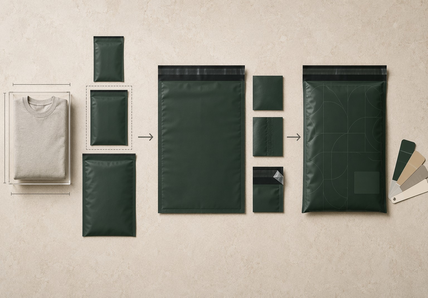
Before ordering, measure the product in its packed form rather than its display form. If several units are commonly shipped together, measure the typical bundle as well. The finished mailer should leave enough room for easy insertion and a clean seal without creating a large, loose pocket around the item.
Many e-commerce businesses benefit from keeping a small size range instead of relying on one “universal” bag. A simple size system makes packing more consistent and helps the final parcel look intentional.
Pack the Product Before You Seal the Parcel
A strong mailer cannot correct careless preparation inside the bag. The product should be clean, dry, folded or arranged neatly, and protected from any hard components that may rub against the film.
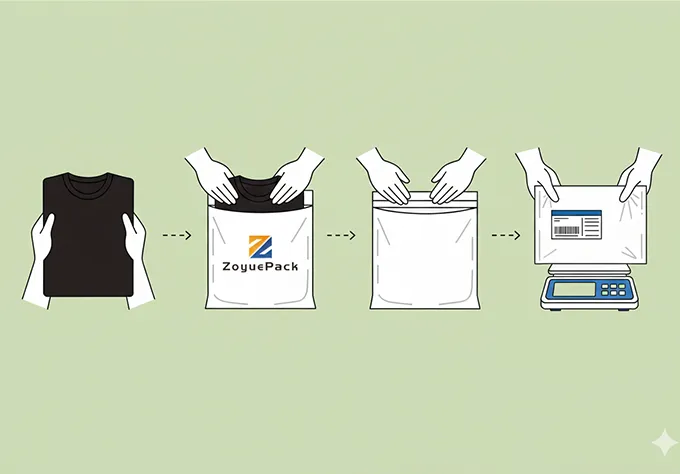
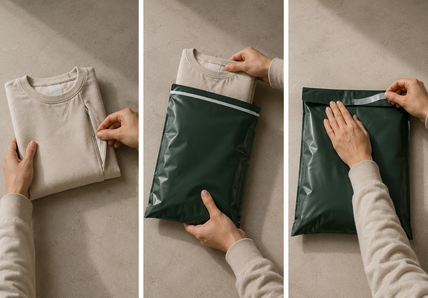
For apparel, fold each item to match the shape of the mailer. If presentation matters, tissue paper or an inner garment bag can keep the product organized and create a more polished opening experience. Turn sharp zipper pulls or buckles inward, or cover them before packing.
For books and documents, align the item with the back of the mailer rather than leaving it floating in the center. Use a cardboard insert when bending would affect the product. If the contents are delicate, choose cushioning rather than expecting a standard film mailer to absorb impact.
Once the item is inside, gently press out excess air. Do not compress the product so aggressively that the seams are stretched. The goal is a compact parcel with an even shape, not a vacuum-packed bundle.
Treat the Adhesive Strip as a Security Feature
The closure is a small part of the bag, but it carries much of the responsibility during transit. For reliable sealing, keep the adhesive area clean and dry. Remove the release liner only when the parcel is ready to close, then bring the flap down evenly and press across the entire strip.
Avoid sealing over wrinkles, dust, tissue edges, or an overfilled section of the bag. These interruptions can reduce contact between the adhesive surfaces. If the mailer has been stored in an unusually cold or damp area, allow it to return to a suitable packing-room condition before use.
For return-friendly packaging, a second adhesive strip can make the customer’s return process easier without requiring extra tape or another bag. If tamper evidence is important, discuss closure options with the packaging supplier during development rather than adding a solution after production.
Look Beyond “Waterproof” on the Specification Sheet
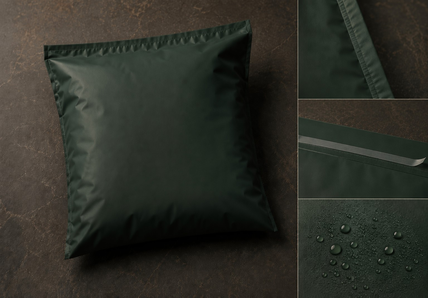
Customers do not inspect a mailer by reading its material certificate. They judge it by what reaches their door. A bag that stays closed, resists ordinary scuffs and handling, and keeps the contents concealed creates a quiet sense of reliability.
When evaluating a shipping mailer, consider the complete construction:
Film and seam strength:
Water resistance:
Closure performance:
Opacity:
The contents should not be visible through the film, especially for apparel, personal items, or higher-value goods.
Surface quality:
It is also important to use precise language. A water-resistant shipping bag can provide useful protection, but it should not be presented as suitable for prolonged immersion unless it has been designed and tested for that purpose. Clear specifications build more trust than exaggerated claims.
Turn a Practical Mailer into a Recognizable Brand Touchpoint
The doorstep is often the first place an online customer physically encounters a brand. A plain mailer can complete the delivery. A well-designed one can make the order feel considered.
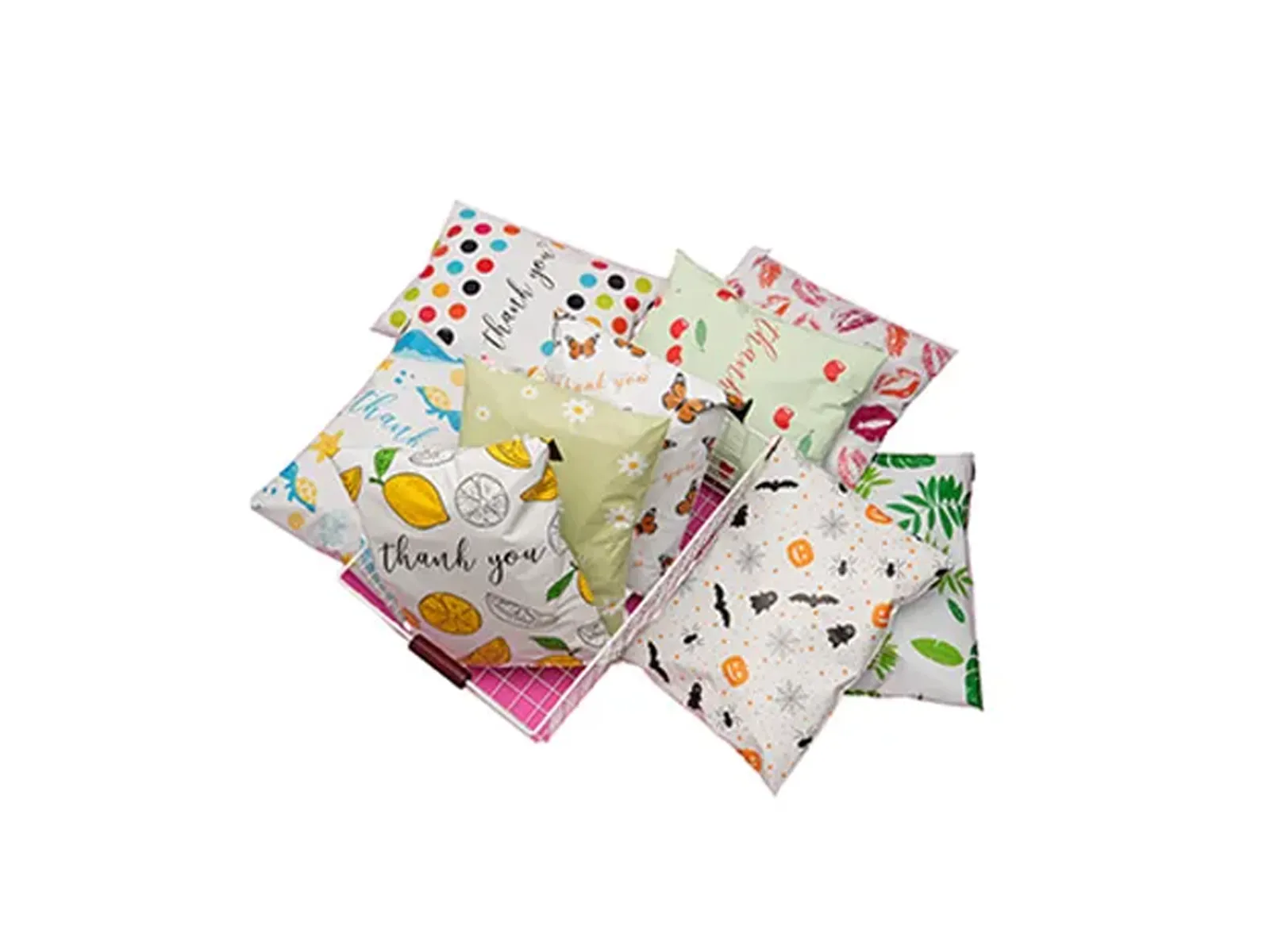
Customization does not need to be loud. A restrained logo, a distinctive color, a repeating pattern, or a short line of copy can make the parcel recognizable without overwhelming it. The best design feels consistent with the product and the customer: playful graphics may suit a fashion or gift brand, while a minimal matte finish may fit a premium basics label.
Small details can carry the story further. A printed thank-you message, a carefully placed label, or tissue in a matching color can connect the outer package to the unboxing experience. These touches work because they feel deliberate—not because they occupy every available surface.
Explore printed poly mailers if the goal is to create packaging that works as both a shipping tool and a consistent visual asset.
Customize the Specification Before You Decorate the Bag
It is tempting to begin a custom mailer project with colors and artwork. A better process starts with the shipping operation.
Before requesting a quotation or approving a sample, define:
The products and typical order combinations the mailer must hold
The packed dimensions and weight of those orders
The level of puncture, moisture, and privacy protection required
The preferred closure, including whether a return strip is needed
The artwork, print coverage, colors, and surface finish
The expected order quantity, packing method, and delivery schedule
Any material or end-of-life requirements relevant to the destination market
Once these points are clear, the supplier can recommend a more suitable structure and production method. The usual path is consultation, specification and artwork review, sampling or proof approval, production, and delivery.
If environmental positioning is part of the brief, ask precise questions. “Recyclable,” “recycled content,” and “compostable” describe different things, and their practical value depends on the material construction and available local collection or disposal systems. Packaging claims should match the actual specification supplied.
Common Poly Mailer Mistakes to Avoid
Even a good bag can underperform when it is used incorrectly. Watch for these recurring problems:
Using a standard mailer for a fragile product that needs cushioning or a box
Packing sharp hardware without covering it
Choosing one oversized bag for every order
Overfilling the mailer until the seams and flap are under tension
Sealing over dust, folds, or trapped packaging material
Applying a shipping label across an uneven or heavily wrinkled surface
Approving attractive artwork before confirming dimensions and print limits
Making environmental or performance claims that the specification does not support
A short packing test can reveal most of these issues before a full production run. Pack real products, label the parcels as your warehouse would, and handle them through a basic drop, rub, and moisture-exposure review appropriate to your needs.
A Better Mailer Is a Better Delivery Experience
Poly mailers appear simple because the best ones do their job without attracting attention to the mechanics. They fit the product, close cleanly, protect it through normal shipping conditions, and arrive looking like they belong to the brand that sent them.
Start with function: product compatibility, correct dimensions, suitable strength, secure sealing, and privacy. Then add the visual decisions that make the package recognizable. When those two sides work together, the mailer becomes more than a disposable outer layer. It becomes a practical part of fulfillment and a consistent introduction to your brand.
ZoyuePack provides a range of poly mailers and custom packaging options for different products, visual styles, and shipping requirements. To develop a suitable specification, prepare your product dimensions, typical order quantity, preferred material, artwork, and destination market before starting the conversation.
Oven Zhong
I’ve spent over 20 years deeply rooted in the packaging industry, learning the craft from the ground up within my family’s business. Today, as the founder of ZoyuePack, I’m known by colleagues and competitors alike as the "Packaging Brother"—a title I wear with pride because I believe in collaboration over mere competition. You’ll often find me on the factory floor filming videos to demystify the science of LDPE versus compostable materials. For me, ZoyuePack isn't just a faceless corporation; it’s a platform where I can educate, share candid industry insights, and help you tell your brand’s story through sustainable, innovative packaging.
 English