Custom Mylar bags look simple from the outside. Pick a size, add a logo, print the design, and place the order. That is how many brands think the process works at the beginning.
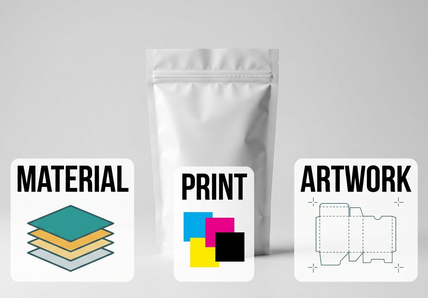
In real production, the decisions come earlier than most people expect. The material structure affects shelf life. The bag shape affects filling and display. The artwork file affects print quality. The printing method affects cost, lead time, and color consistency. If one of those details is rushed, the final bag may still look acceptable in a photo but fail during packing, shipping, or customer use.
This guide walks through the practical decisions you should make before ordering custom Mylar bags, especially if you are preparing packaging for food, coffee, snacks, supplements, pet products, cosmetics, or other retail goods.
Start With the Product, Not the Bag
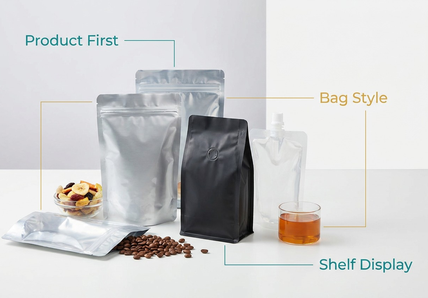
Before choosing a bag style or finish, start with the product itself. A pouch for roasted coffee does not need the same structure as a pouch for gummies, dried fruit, protein powder, or liquid sauce. The product should decide the packaging requirements.
Ask these questions first:
- How much product will go into each bag?
- Is the product sensitive to oxygen, moisture, light, or odor transfer?
- Does the bag need to stand upright on a shelf?
- Will the customer open and close it multiple times?
- Will the product be filled by hand or by an automatic packing line?
- Does the package need food-contact, child-resistant, or tamper-evident features?
Once those answers are clear, it becomes much easier to choose between stand-up pouches, flat pouches, three-side-seal bags, side-gusset bags, flat-bottom bags, spouted pouches, or roll stock.
For example, a snack brand may want a stand-up pouch with a zipper because the product needs shelf display and repeat use. A coffee roaster may need a side-gusset or flat-bottom bag with a one-way degassing valve. A sample-size product may only need a simple flat pouch. A liquid or sauce product may require a spout and stronger seal testing.
The point is simple: do not choose a bag because it looks popular. Choose it because it fits how the product is filled, stored, displayed, shipped, and used.
Choose the Right Material Structur
Most custom Mylar bags are made from laminated films rather than a single material. A typical structure includes an outer layer for printing and appearance, a middle layer for barrier performance, and an inner layer for heat sealing and product contact.
Common material layers include:
Layer or Material | Common Role in the Bag | What to Check |
PET / BoPET | Strength, print surface, structure stability | Good for durability and print clarity |
MOPP / BOPP | Matte or glossy appearance, print surface | Often used for retail packaging appearance |
Aluminum foil or metallized film | Light, oxygen, and moisture barrier | Useful for coffee, tea, snacks, and sensitive products |
Kraft paper | Natural look and tactile feel | Often combined with inner seal layers |
PE / LLDPE | Inner heat-seal layer | Important for sealing, flexibility, and food contact |
PLA / PBAT or other compostable films | Sustainability-oriented options | Claims must match certification and disposal conditions |
The most common mistake is choosing a material only by appearance. A kraft paper pouch may look natural, but it still needs the right inner layer if the product requires heat sealing. A clear window may help customers see the product, but it can reduce light protection. A thicker bag may feel premium, but it can increase cost and may not be necessary for lightweight products.
If the product is sensitive, ask your supplier about barrier performance. For food and coffee packaging, OTR and WVTR are useful terms to know. OTR refers to oxygen transmission rate. WVTR refers to water vapor transmission rate. You do not always need laboratory-level data for every small project, but for products with shelf-life risk, these numbers help avoid guessing.
Match the Printing Method to the Order
There is no single “best” printing method for custom Mylar bags. The right choice depends on order quantity, artwork complexity, budget, and how often the design will change.
1) Digital Printing
Digital printing is usually the easiest choice for small runs, test orders, seasonal designs, or products that may change artwork frequently. It does not require printing plates or cylinders, so the setup is faster. It is useful when a brand wants to test a design before committing to a large quantity.
The trade-off is unit cost. For larger runs, digital printing may become more expensive than other methods.
2) Gravure Printing
Gravure printing is built for larger production runs where color consistency and high-quality detail matter. It has higher upfront setup costs because engraved cylinders are required, but the unit cost becomes more attractive at scale.
If you are planning repeat orders with the same artwork, gravure may be worth discussing with your supplier.
3) Sticker on Mylar
Sticker on Mylar is not the same as printing directly on the bag. The design is printed on a label and then applied to the pouch. It can be useful for very small batches, urgent samples, simple designs, or budget-sensitive launches.
The limitation is durability and appearance. A label can peel, scratch, or look less integrated than direct printing. For premium retail packaging or products handled frequently, direct printing usually looks more professional.
Prepare Artwork Before You Ask for Production
Artwork problems are one of the fastest ways to delay a packaging order. A design may look good on a screen but still be unsuitable for printing.
Before sending files to a supplier, check the basics:
- Use vector files for logos, icons, and text whenever possible.
- Keep raster images at least 300 DPI at actual print size.
- Prepare files in CMYK or confirm Pantone colors when color accuracy matters.
- Use the supplier’s dieline instead of creating a layout from guesswork.
- Keep important text and logos inside the safe zone.
- Add bleed where the design needs to print to the edge.
- Check barcode size and contrast if the bag will be scanned.
- Confirm whether the finish is matte, glossy, soft touch, metallic, holographic, or spot UV.
Vector artwork matters because it can scale without becoming blurry. Raster images, such as JPG or PNG files, can work for photos, but they lose quality when enlarged. If your logo is only available as a low-resolution image, rebuild it as a vector file before printing.
A professional supplier should also check whether the design works with the bag shape. A flat pouch, stand-up pouch, and side-gusset bag all have different printable areas, folds, seals, and distortion points. Artwork placed too close to a seal or gusset may not look right after bag making.
Do Not Skip Proofing (Mockup)
Proofing is not a formality. It is the last chance to catch mistakes before production.
There are two common types of proof:
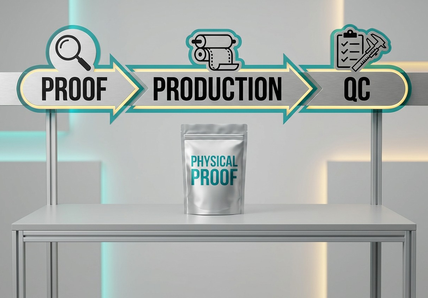
- Soft proof: a digital mockup showing the design, dieline, placement, and text. It is useful for checking spelling, barcode placement, printing zones, and general layout. It is fast, but it does not fully show material texture, final color, or special finishes.
- Hard proof or physical sample: a real printed sample made with the selected material and printing method. It takes more time and may add cost, but it is much more useful when color, finish, zipper function, bag feel, or shelf presentation matters.
When reviewing a proof, do not only look at the front design. Check the whole bag:
- Is the product name spelled correctly?
- Are nutrition facts, ingredients, warnings, and compliance text readable?
- Is the logo centered and clear?
- Are the colors close enough to the brand standard?
- Does the zipper open and close smoothly?
- Is the tear notch easy to use?
- Does the bag stand properly after filling?
- Does the heat seal feel strong enough for the product weight?
A proof may feel like a delay, but it is cheaper than correcting thousands of finished bags.
Understand the Production Process
Once the bag structure, artwork, proof, and order details are confirmed, production usually follows a sequence like this:
1) Artwork and prepress -- the supplier checks the dieline, print files, colors, and technical details.
2) Plate or mold preparation -- required for gravure printing.
3) Printing -- the design is printed on the selected outer film.
4) Lamination -- printed film is bonded with barrier and sealant layers.
5) Curing -- laminated film may need time to stabilize before bag making.
6) Bag making -- the film is cut, folded, sealed, and shaped into the final pouch.
7) Functional add-ons -- zippers, valves, spouts, hang holes, tear notches, or child-resistant features are added where required.
8) Inspection and packing -- finished bags are checked, counted, packed, and prepared for shipping.
The exact steps vary by bag type. A simple flat pouch is not made the same way as a spouted pouch, flat-bottom coffee bag, or child-resistant bag. If your product has special handling or compliance requirements, discuss those before production starts.
Quality Control Should Be Specific
“Good quality” is too vague. For custom Mylar bags, quality should be checked in practical terms. Useful checks include:
- Film thickness consistency
- Seal strength
- Print alignment
- Color consistency
- Lamination bond strength
- Zipper or closure performance
- Valve or spout function, if used
- Bag dimensions
- Odor or contamination issues
- Carton packing condition before shipment
For food-contact packaging, ask for relevant material documentation. For cannabis, pharmaceuticals, chemicals, or products requiring child resistance, compliance should be discussed before design approval, not after printing.
A Practical Checklist Before You Request a Quote
To get a useful quote, send your supplier more than a logo and a bag size. A good brief should include:
- Product type and net weight per bag
- Expected shelf life and storage conditions
- Bag style, such as stand-up pouch, flat pouch, side gusset, or flat bottom
- Required size or product dimensions
- Material preference, if known
- Whether the bag needs a zipper, valve, spout, tear notch, window, or hang hole
- Printing method preference, if any
- Finish preference, such as matte, gloss, metallic, holographic, or soft touch
- Artwork files or design concept
- Order quantity
- Target delivery date and destination
- Any compliance requirements
If you are unsure about the structure, say so. ZoyuePack as a one-stop packaging solution provider can usually recommend options once they understand the product and sales channel.
Final Thoughts
Custom Mylar bags are not just printed pouches. They are a combination of product protection, shelf presentation, material engineering, print preparation, quality control, and logistics.
The best results come from making decisions in the right order: understand the product, choose the structure, prepare proper artwork, select the printing method, review the proof, then move into production.
If you are planning a custom Mylar bag project, start with the product requirements and the customer experience you want to create. The design will be stronger, the quote will be more accurate, and the production process will be easier to manage.
Oven Zhong
I’ve spent over 20 years deeply rooted in the packaging industry, learning the craft from the ground up within my family’s business. Today, as the founder of ZoyuePack, I’m known by colleagues and competitors alike as the "Packaging Brother"—a title I wear with pride because I believe in collaboration over mere competition. You’ll often find me on the factory floor filming videos to demystify the science of LDPE versus compostable materials. For me, ZoyuePack isn't just a faceless corporation; it’s a platform where I can educate, share candid industry insights, and help you tell your brand’s story through sustainable, innovative packaging.
 English