In 2026 logistics, freight cost is driven less by the item itself and more by space and handling — dimensional weight pricing, packaging waste, and labor time at pack-out. For many e-commerce categories, switching from rigid cartons to poly bags can reduce shipment volume, improve carton utilization, and lower total shipping spend. This guide explains where the savings come from, when the switch makes sense, and how to communicate needs clearly when sourcing poly mailer in Chinese supply chains.
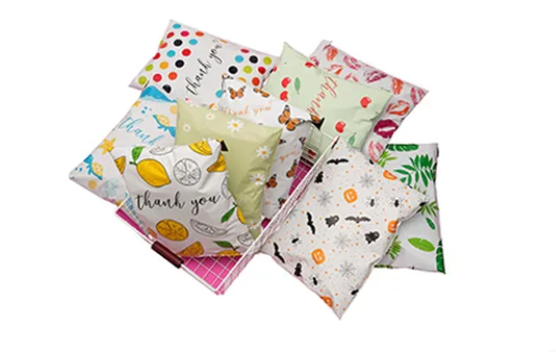
Poly Mailer in Chinese Sourcing: Why Freight Costs Are Rising in 2026
What Is Driving the Cost Increase
| Cost Driver | How It Affects Shipping Spend |
|---|
| Dimensional weight pricing | Carriers charge by volume or actual weight — whichever is greater; oversized boxes inflate the bill |
| Fuel surcharges | Applied as a percentage of base freight — larger packages multiply the surcharge |
| Warehouse labor | Assembling and sealing boxes takes longer than sealing a poly mailer |
| Packaging storage | Flat boxes require significant warehouse floor space before they are even used |
| Returns handling | Bulkier returns are more expensive to process and restock |
The Packaging Audit That Reveals Hidden Cost
The simplest starting point is measuring the empty space ratio in your current shipments. Pick 20 recent carton shipments at random. Measure the box volume versus the product volume inside. If more than 30–40% of the box is void fill, you are paying to ship air — and dimensional weight pricing means you are paying the carrier for that air too.
Poly Bags Savings Mechanics: How Poly Mailers Reduce Dimensional Weight
Why Flexible Packaging Changes the Economics
A poly mailer conforms to the product shape. It does not create a rigid box around the product with 3–5 cm of void fill on every side. This single characteristic drives the freight saving.
| Metric | Rigid Box | Poly Mailer |
|---|
| Dimensional weight | Box OD dimensions × density factor | Product dimensions × density factor — typically 40–60% less |
| Void fill material | Required — adds weight and cost | None — film conforms to product |
| Pack-out time | 30–90 seconds (erect, pack, seal) | 10–20 seconds (insert, peel, seal) |
| Packaging storage | Significant floor space for flat boxes | Compact — mailers ship flat in cartons |
| Per-shipment packaging cost | Box + tape + void fill | Mailer only |
Where the Savings Are Strongest
Apparel — t-shirts, knitwear, leggings, hoodies
Soft goods — towels, bedding, cushion covers
Textiles and fabric items
Small accessories — belts, scarves, hats, wallets
Non-fragile items with flexible or resilient construction
A clothing brand switching a standard apparel order from a 30×20×10 cm box to a fitted poly mailer can reduce the dimensional weight billable unit from 600 cm3 to approximately 250 cm3 — a saving that compounds across every shipment.
Poly Bags vs. Boxes: Protection, Damage Risk, and When Not to Switch
Protection Trade-offs
| Protection Factor | Rigid Box | Poly Mailer |
|---|
| Crush and compression | High — walls resist stacking pressure | Low — no structural resistance to compression |
| Water resistance | Moderate — cardboard fails when wet | High — poly film repels water effectively |
| Tear and puncture | Low — surface damage can penetrate box | Moderate to high depending on film thickness and co-extrusion |
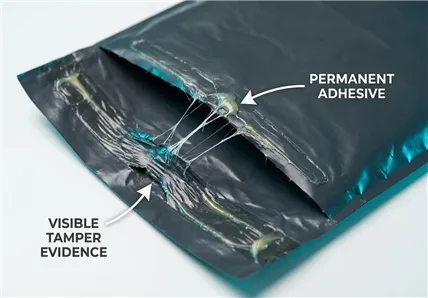
| Tamper evidence | Moderate — tape can be resealed | High — peel-seal with security tint interior |
When Boxes Still Win
Fragile products: ceramics, glass, electronics — require rigid structural protection
Premium unboxing experience: brands where the rigid box is part of the product experience and brand identity
Heavy or sharp-edged items: products that would puncture or tear standard poly film under handling stress
High-value goods: where damage risk cost exceeds the freight saving
The Hybrid Strategy for Mid-Risk Items
For items that need some protection but are not truly fragile:
Poly mailer with bubble-lined interior — combines water resistance with cushioning
Poly mailer plus paper wrap around the product — reduces abrasion without adding significant dimension
Kraft mailer as an alternative where a semi-rigid format suits the brand aesthetic
Poly Mailer in Chinese Specifications: Thickness, Adhesives, and Security Features
Specification Checklist
| Specification | Options | What to Define |
|---|
| Film thickness | 50–120 microns typical | Match to product weight and handling intensity — heavier items need thicker film |
| Material structure | Single-layer or co-extruded | Co-extruded (2–3 layers) gives better tear and puncture resistance |
| Interior color | White interior, black security interior, or clear | Black interior prevents contents from being visible — standard for high-value items |
| Self-seal adhesive | Single-strip standard or double-strip with return option | Double-strip allows the customer to reseal for returns |
| Tamper evidence | Security pattern on adhesive strip | Visible if opened — standard for many e-commerce programs |
| Waterproofing | Inherent to poly film — confirm no film pinholes | Request water immersion test confirmation for moisture-sensitive items |
| Puncture resistance | Elmendorf tear or dart impact test | Request test data for your product category |
Branding Options
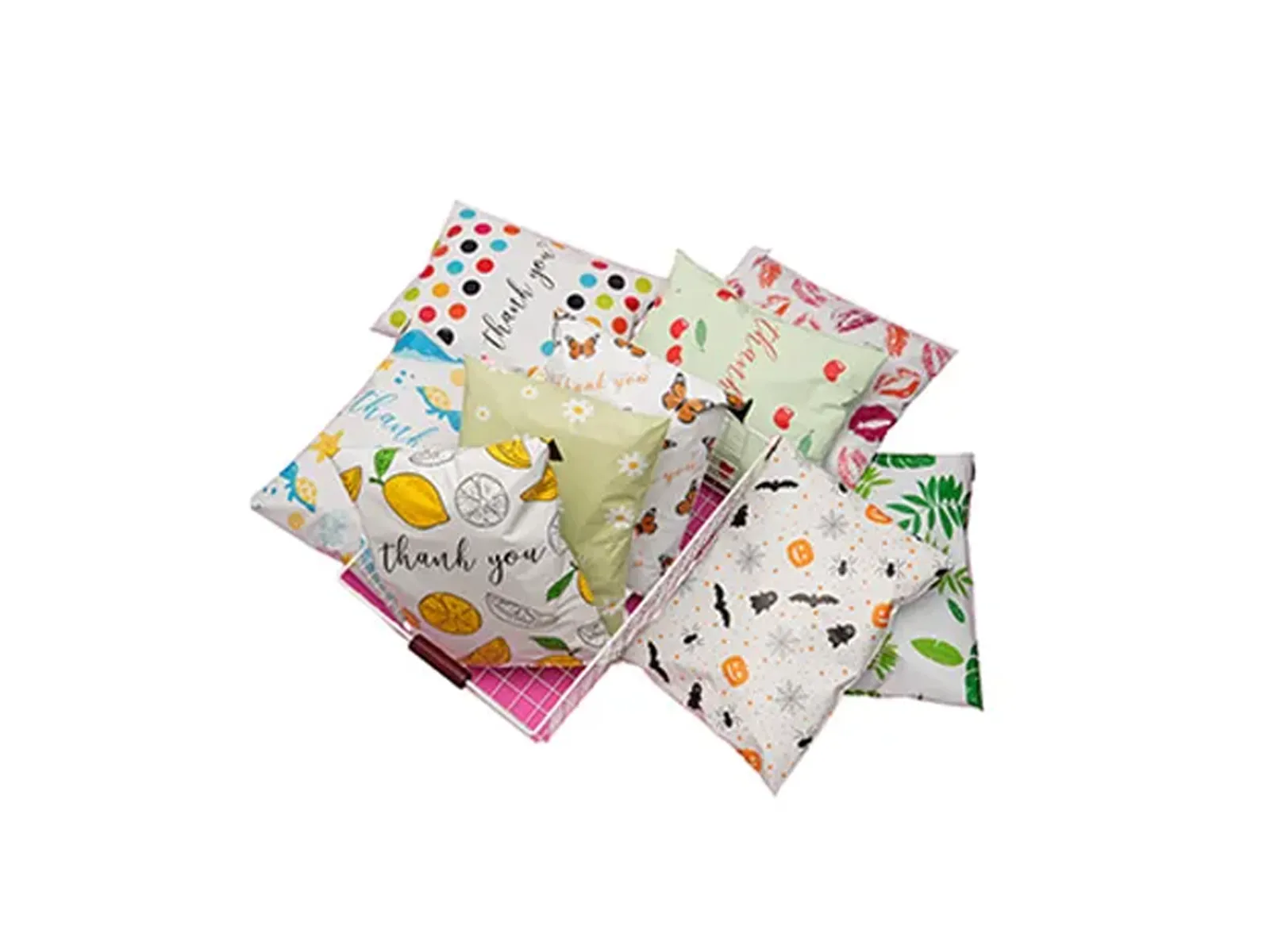
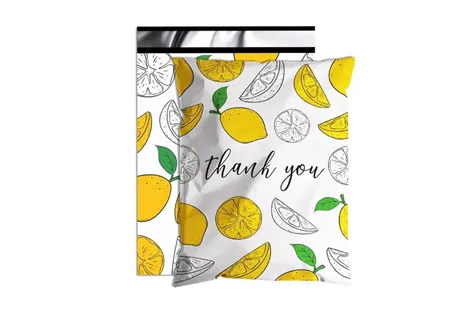
Custom printing: 1–4 colors on exterior surface — confirm Pantone accuracy and rub resistance
Matte or gloss finish: matte is trending for premium e-commerce; gloss for standard retail
Barcode zone: unprinted white panel on the label area for carrier and retailer scanning
Logo placement: aligned to the side that faces up in the mail stream for maximum visibility
Communicating Specs When Sourcing Poly Mailer in Chinese Supply Chains
When working with China packaging manufacturer of packaging materials and supplies, provide a complete specification sheet rather than a general description. Include all dimensions (width × height in mm), film thickness in microns, interior color, adhesive strip type, print artwork as vector files, quantity forecast, and any specific test requirements. A complete brief eliminates the most common misquotation and production errors.
Poly Bags Implementation Plan: Validating the Freight Reduction
Step-by-Step Rollout
| Phase | Action | What to Measure |
|---|
| Audit | Review current carton dimensions and void fill ratios for top 20 SKUs | Identify highest-opportunity items for switching |
| Spec and sample | Order samples of poly mailers in correct sizes and thickness for target SKUs | Assess fit, seal strength, and print quality |
| Test shipment | Ship 50–100 units per target SKU in poly mailers through your standard carrier | Compare dimensional weight billing to carton baseline |
| Damage assessment | Track damage and return rates on test shipments for 30 days | Confirm protection is adequate for the product type |
| Full rollout | Switch confirmed SKUs to poly mailer; keep boxes for fragile and premium items | Monitor ongoing metrics quarterly |
Metrics to Track
Shipping cost per order: the primary financial metric — compare week-over-week or month-over-month
Pack-out time: measure average time per order before and after switch
Damage and return rate: confirm protection is not sacrificed for cost saving
Customer feedback: monitor for any packaging-related comments in reviews or support tickets
Packaging storage cost: track reduction in warehouse space consumed by packaging inventory
Supplier Qualification for Consistent Supply
Request samples from at least two suppliers and compare seal strength, film clarity, and print accuracy
Order a pilot batch of 500–1,000 units before committing to volume
Confirm adhesive stability across your storage temperature range — adhesive that fails in cold storage or hot warehouse conditions is a significant operational risk
Confirm lead time for reorder — poly mailers for a fast-moving e-commerce operation should be available within 2–3 weeks on standard reorder
Conclusion
For many e-commerce businesses, packaging is one of the fastest and most accessible levers to reduce shipping spend. Switching select SKUs from cartons to poly bags can cut dimensional weight billing, accelerate fulfillment throughput, and reduce packaging storage needs — while still protecting products when the right specifications are used. The key is to audit your current shipments, test systematically, and source the correct poly mailer in Chinese specifications for your products, routes, and carrier requirements.
FAQ
Q1: What products are best suited for poly bags instead of boxes?
Apparel, soft goods, textiles, and non-fragile accessories are the strongest candidates because they do not require structural crush protection and conform well to the flexible poly film format. Items that are already packaged in their own rigid case or clamshell also work well in poly mailers.
Q2: Can poly bags really reduce freight costs by up to 35%?
For the right product categories — primarily soft goods with significant void fill in current carton formats — the dimensional weight reduction from switching to poly mailers can produce savings in the 25–40% range per shipment. Actual savings depend on your current box dimensions, product fit, and carrier dimensional weight pricing model.
Q3: Are poly mailers waterproof?
Standard poly mailers are water-resistant by design — the film does not absorb water and resists typical rain and handling moisture. Performance depends on film thickness, the quality of the self-seal adhesive, and whether there are any pinholes in the film. Request a water immersion test confirmation for moisture-sensitive applications.
Q4: What specifications should I confirm before ordering poly mailers?
Film thickness in microns, material structure (single-layer or co-extruded), interior color (white or security black), adhesive strip type (single or double for returns), tamper evidence feature, print specification including Pantone references, bag dimensions, and whether any specific performance tests are required for your carrier or retail program.
Q5: What does sourcing poly mailer in Chinese supply chains require from buyers?
Provide a complete specification including bag dimensions in mm, film thickness in microns, interior color, adhesive type, print artwork as vector files with Pantone references, annual quantity forecast, and the product type and shipping route the mailer will be used for. Suppliers who receive a complete brief return accurate quotes and produce samples that match the requirement on the first attempt.
Oven Zhong
I’ve spent over 20 years deeply rooted in the packaging industry, learning the craft from the ground up within my family’s business. Today, as the founder of ZoyuePack, I’m known by colleagues and competitors alike as the "Packaging Brother"—a title I wear with pride because I believe in collaboration over mere competition. You’ll often find me on the factory floor filming videos to demystify the science of LDPE versus compostable materials. For me, ZoyuePack isn't just a faceless corporation; it’s a platform where I can educate, share candid industry insights, and help you tell your brand’s story through sustainable, innovative packaging.
 English